What Are Convolutional Neural Networks?
GENE 46100 — Unit 00
2026-03-24
What is a CNN?
A convolutional neural network (CNN) is a network architecture for deep learning that learns directly from data (images, sequences, …).
A CNN is made up of several layers that process and transform an input to produce an output.
Applications
- Scene classification
- Object detection & segmentation
- Image processing
- DNA sequence analysis (our focus!)
Three Key Concepts
- Local receptive fields
- Shared weights and biases
- Activation and pooling
1 — Local Receptive Fields
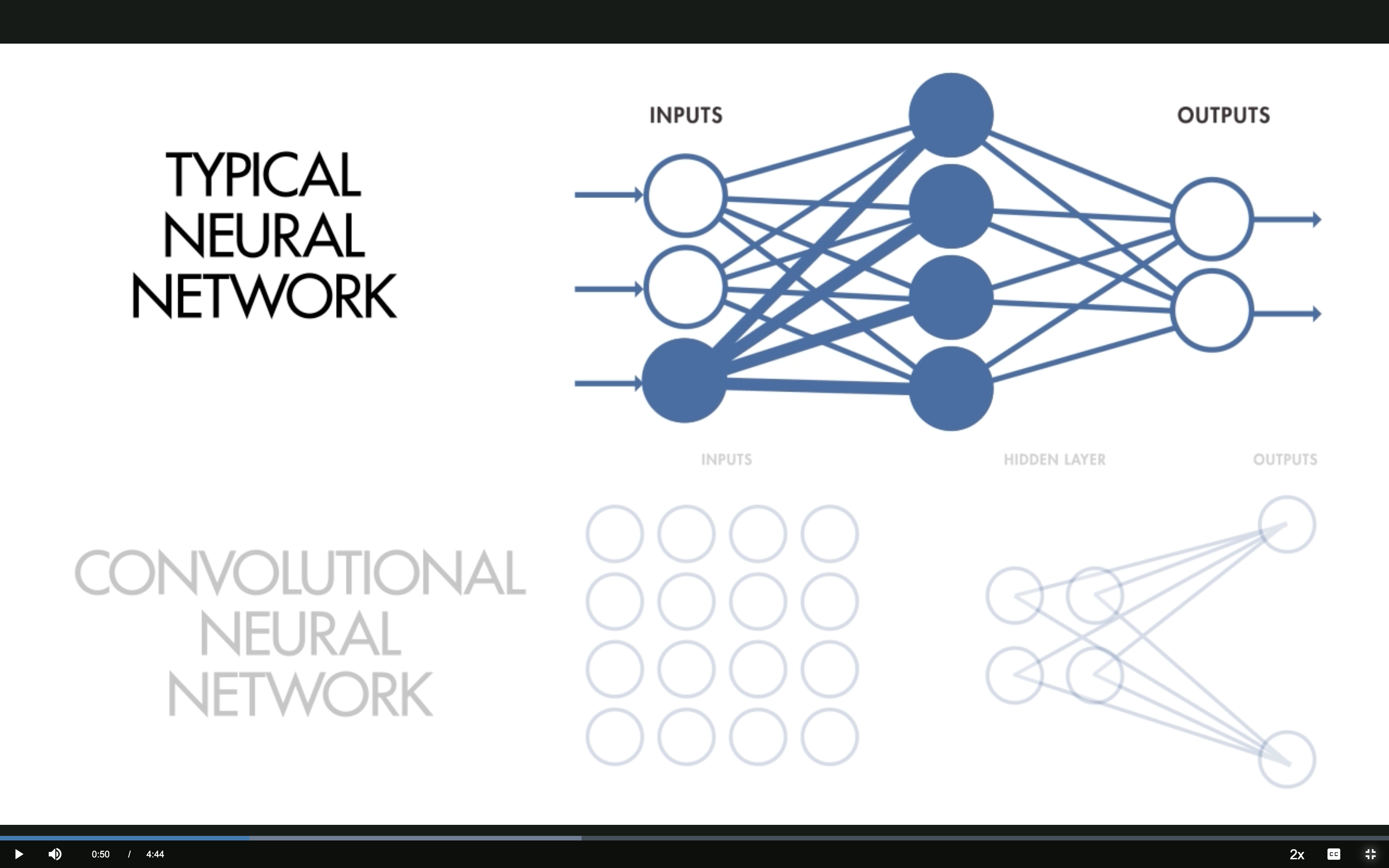
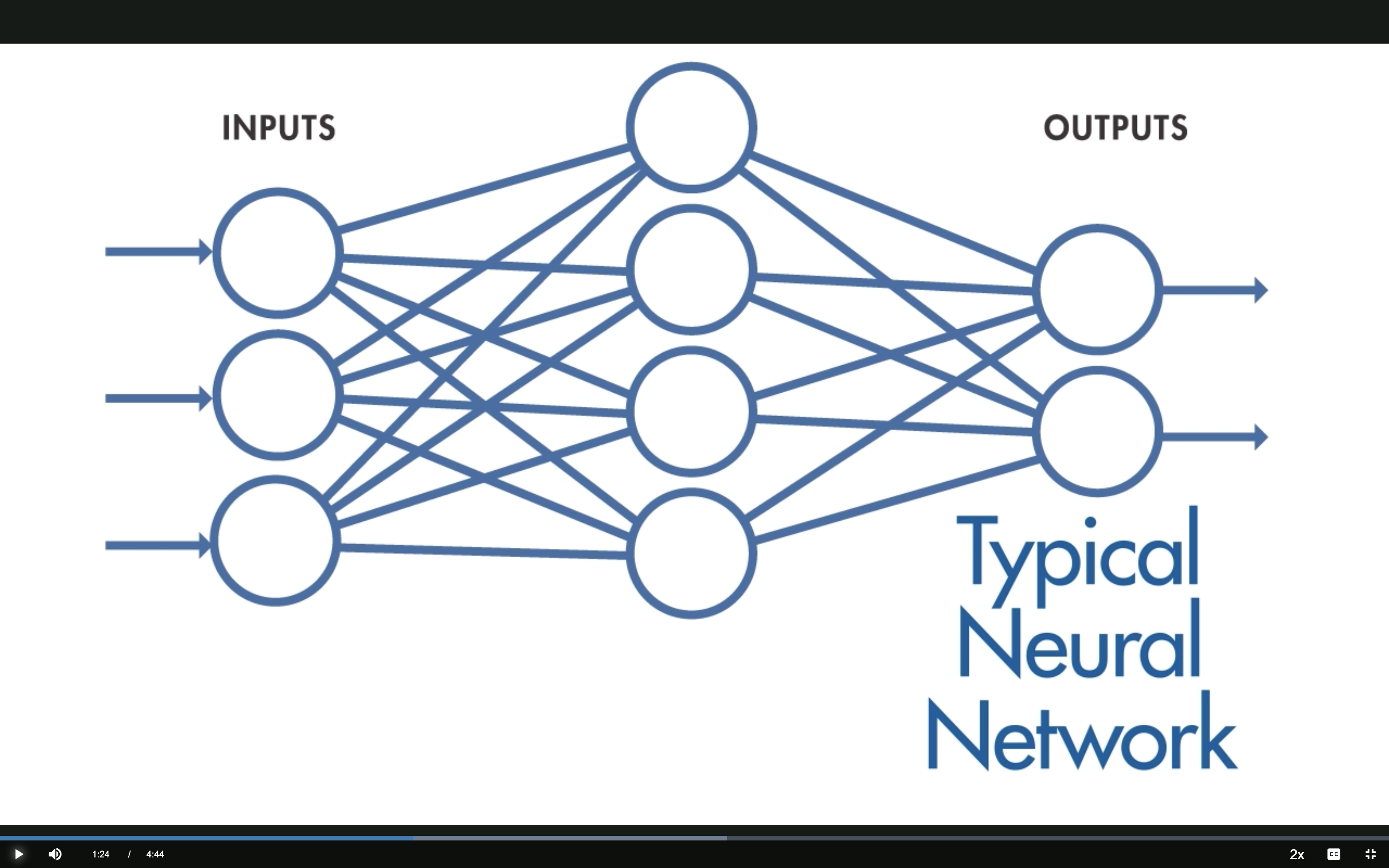
Typical NN: Fully Connected
![]()
Every input neuron connects to every hidden neuron — each hidden neuron has its own set of weights.
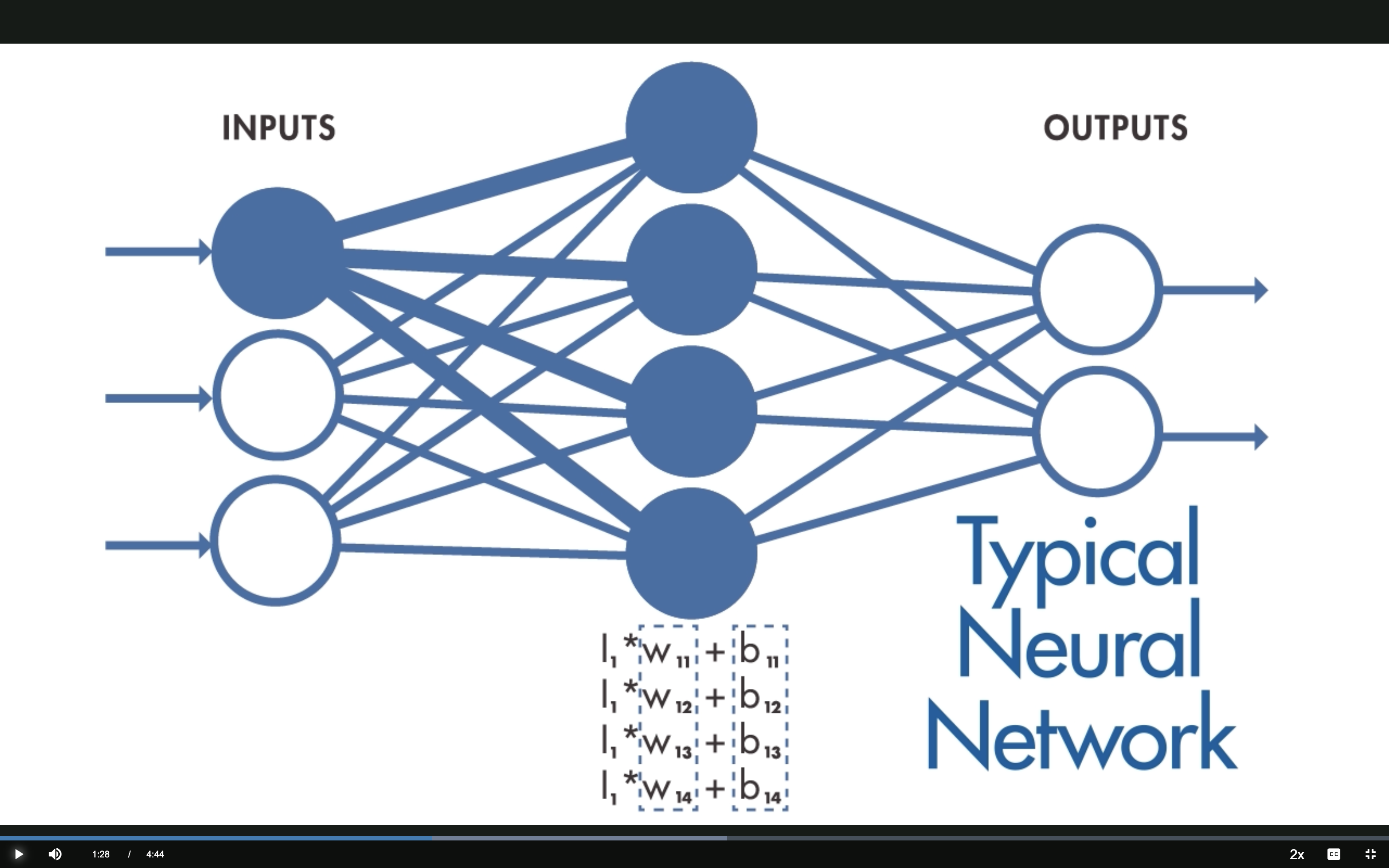
Typical NN: Weights
![]()
Hidden neuron output: \(h_j = \sum_i I_i \cdot W_{ij} + b_j\)
All \(N \times M\) weights are independent — expensive and no spatial structure.
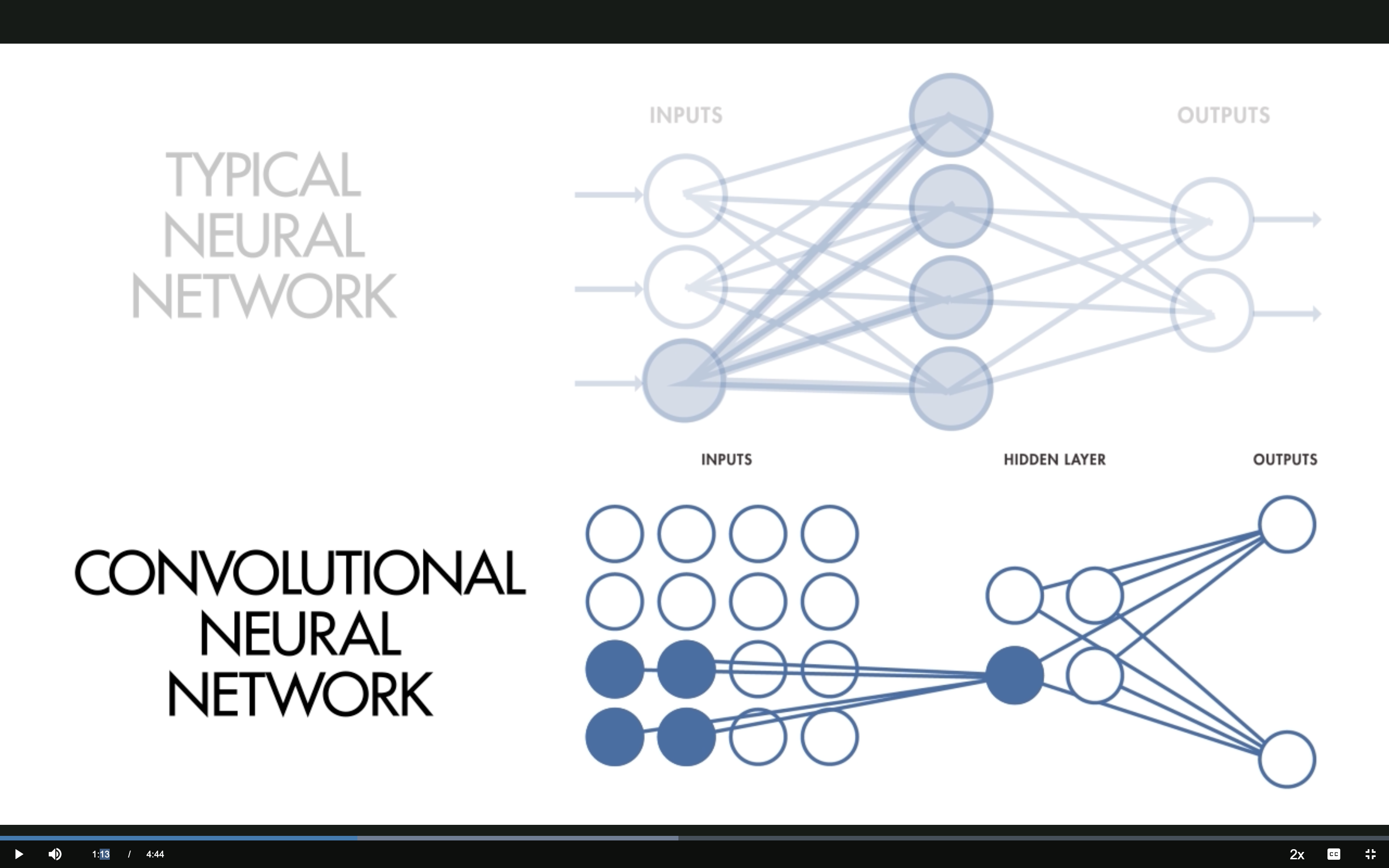
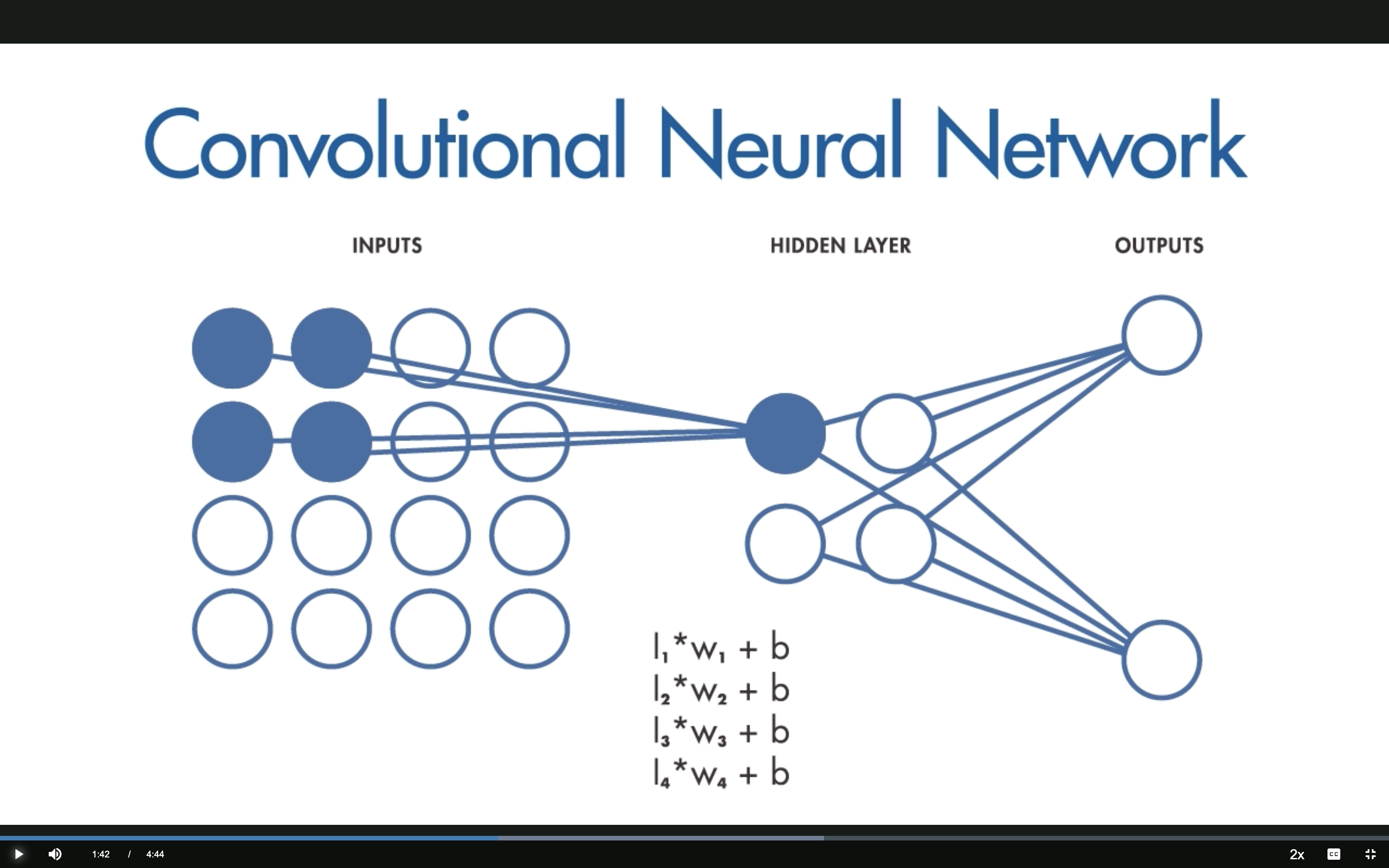
CNN: Local Receptive Fields
![]()
Only a small region of the input connects to each hidden neuron.
The hidden neuron computes: \(h = \sum_k I_k \cdot w_k + b\) using a small filter.
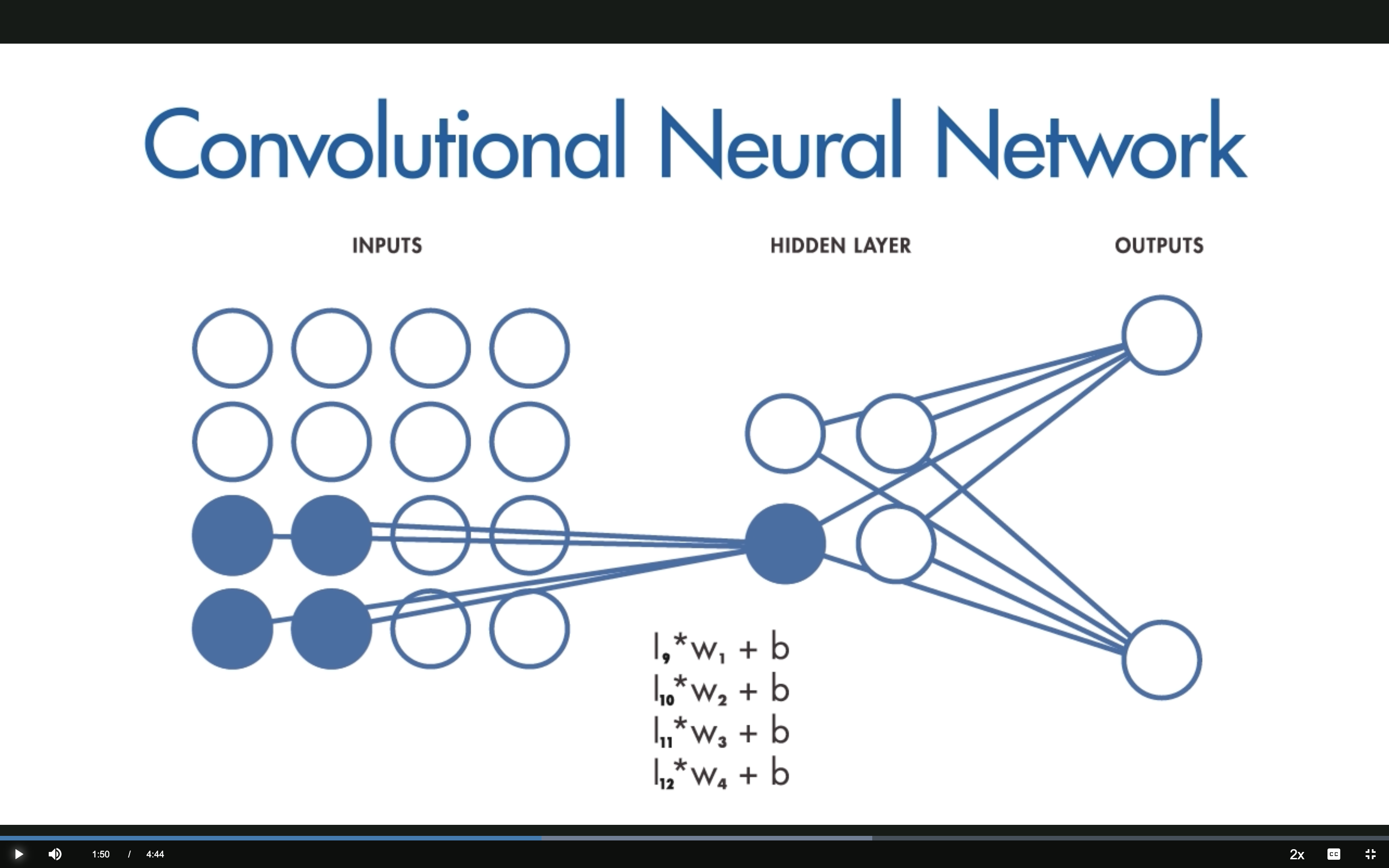
CNN: The Filter Slides
![]()
The same filter (same weights) slides across the input to create a feature map.
This sliding operation is convolution — hence the name convolutional neural network.
2 — Shared Weights and Biases
Key difference from a typical NN: the weights and biases are the same for all hidden neurons in a given layer.
This means every neuron in a layer is detecting the same feature (e.g., an edge or a blob) at different locations.
Compare the equations:
| Weights |
\(I_i \cdot W_{ij} + b_j\) (unique per neuron) |
\(I_k \cdot w_k + b\) (shared) |
| Parameters |
\(N \times M\) |
Filter size only |
Translation Invariance
Because weights are shared, CNNs are tolerant to translation of objects in the input.
A network trained to recognize cats will find the cat wherever it appears in the image.
Genomics analogy: A CNN trained to recognize a TF binding motif will find it regardless of position in the DNA sequence.
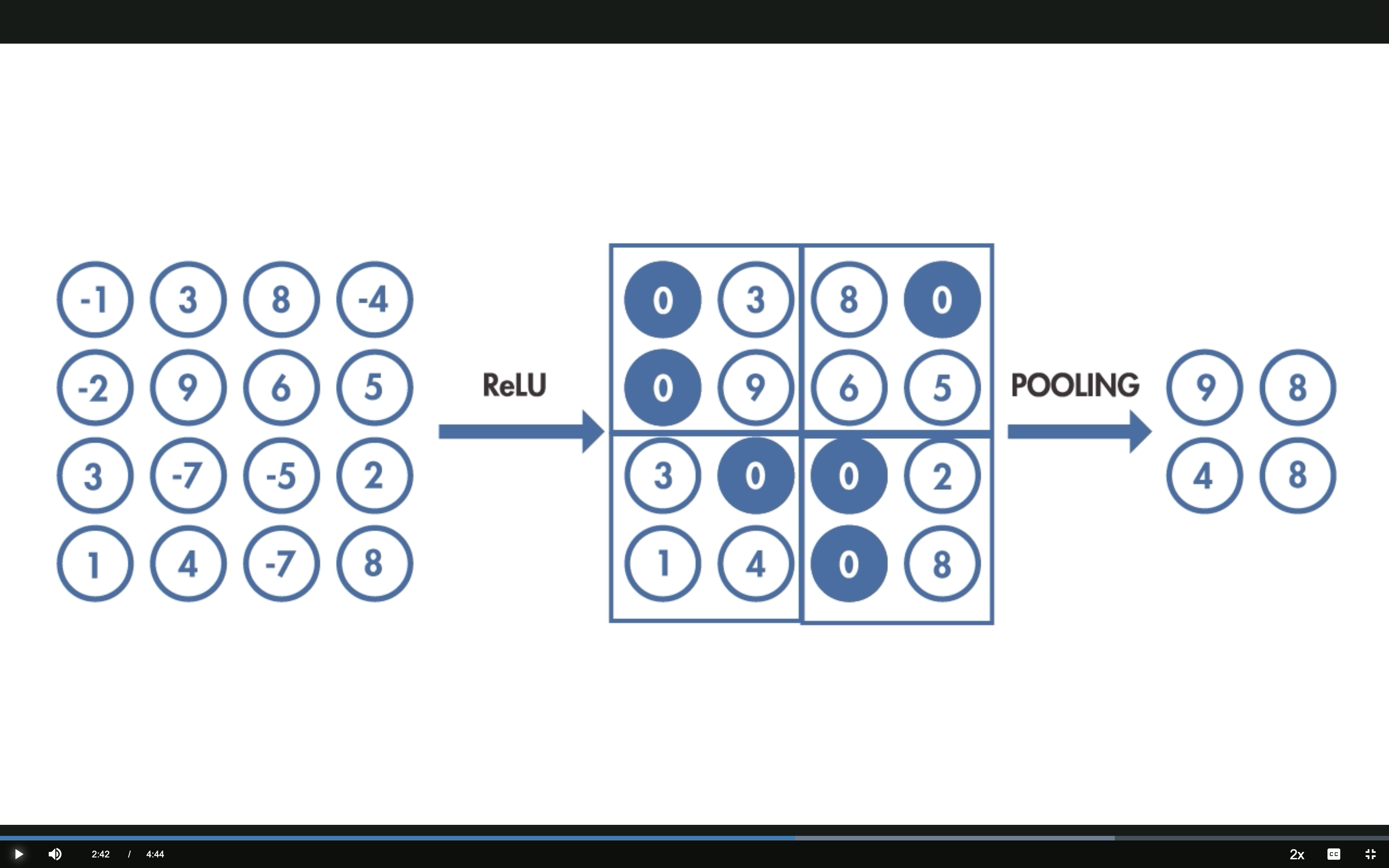
3 — Activation and Pooling
![]()
ReLU: \(f(x) = \max(0, x)\) — negative values become 0, positive values pass through.
Max Pooling: take the maximum value in each 2×2 block — reduces dimensionality while keeping the strongest activations.
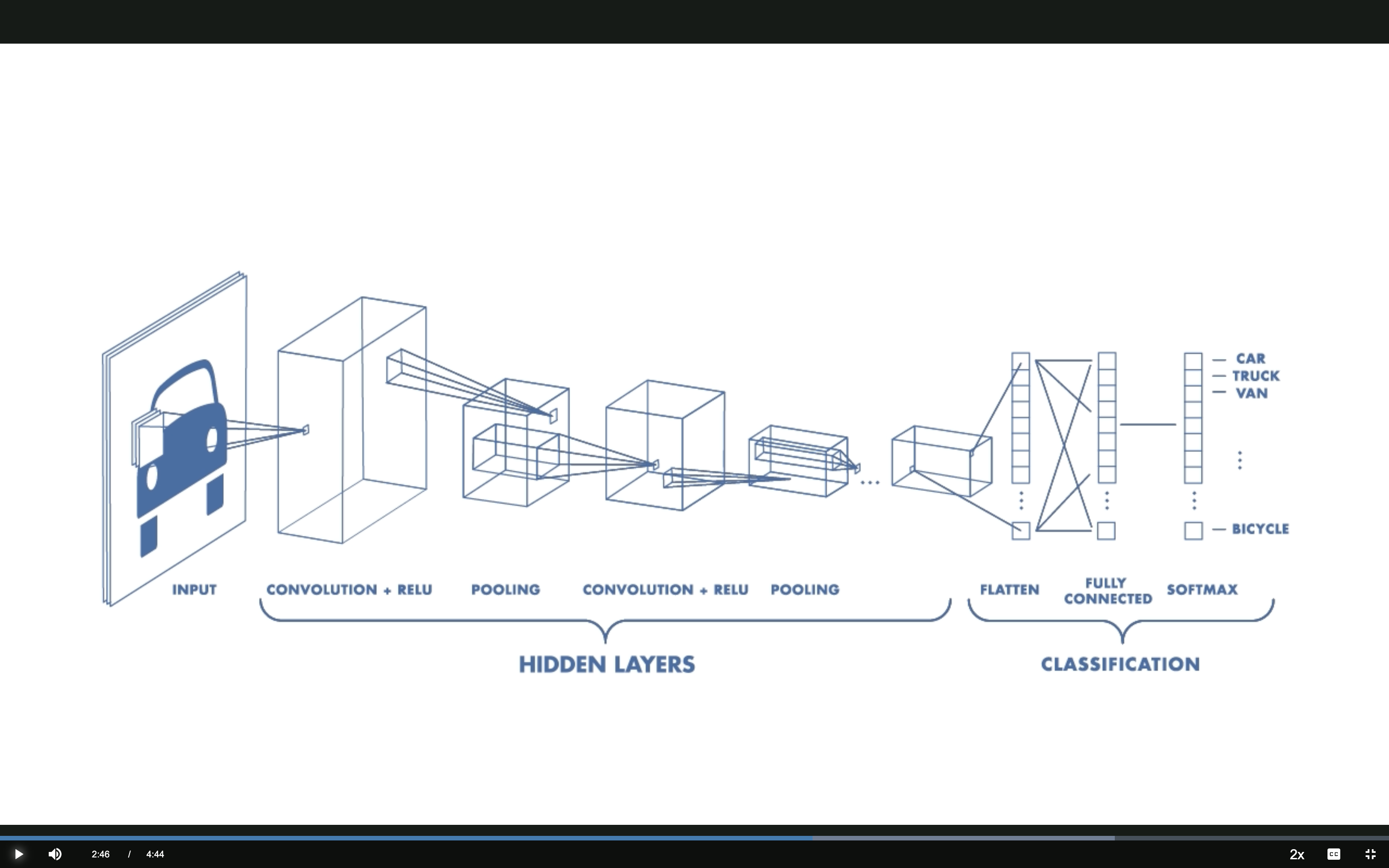
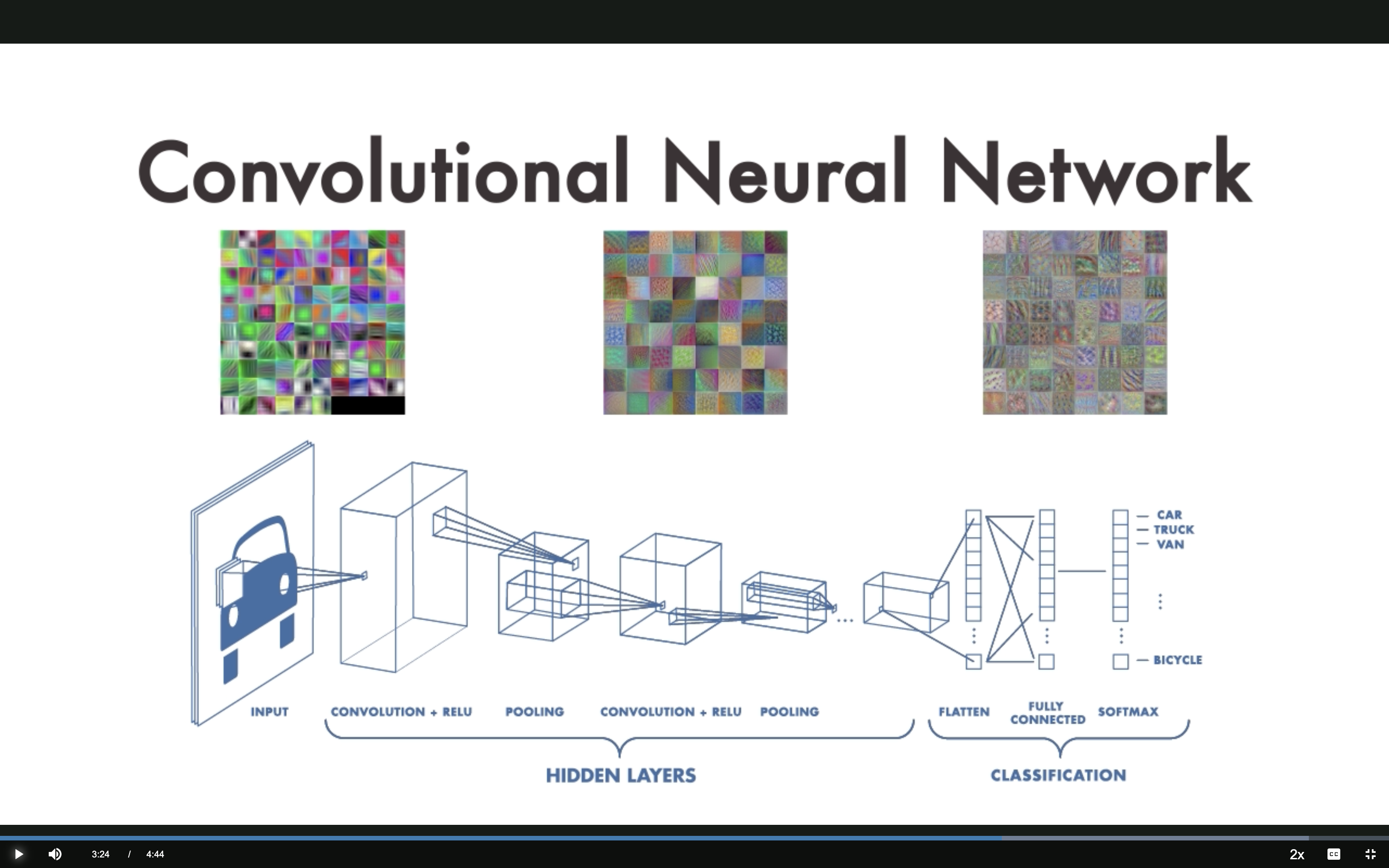
Putting It All Together
![]()
INPUT → CONV+RELU → POOLING → CONV+RELU → POOLING → FLATTEN → FULLY CONNECTED → SOFTMAX
Hierarchical Feature Learning
![]()
Each layer learns progressively more complex features:
| Early layers |
Edges, colors |
Short k-mers |
| Middle layers |
Textures, shapes |
Motifs (e.g., TATA box) |
| Deep layers |
Object parts, objects |
Motif combinations, regulatory logic |
Method 1 — Train from Scratch
Build and train the entire network on your own data.
Pros: Highly accurate, fully customized
Cons:
- Requires hundreds of thousands of labeled examples
- Significant computational resources (GPUs)
This is what we do in the TF binding prediction homework.
Method 2 — Transfer Learning
Use a model pre-trained on one task as the starting point for a related task.
Example: A CNN trained to recognize animals can be fine-tuned to distinguish cars from trucks.
Pros: Requires less data and compute
Genomics example: Fine-tune a model trained on one TF’s binding data to predict binding for a related TF.
Summary
| Local receptive fields |
Small sliding window over input |
| Shared weights |
Same filter at every position → translation invariance |
| Activation (ReLU) |
Introduce non-linearity |
| Pooling |
Reduce dimensionality |
| Hierarchical features |
Simple → complex across layers |
Summary
Three training strategies
- From scratch — most data, most flexibility
- Transfer learning — fine-tune a pretrained model
- Feature extraction — least data needed
Next Steps
- Hands-on: Build a CNN for TF binding prediction
- Key question: Can a CNN learn to detect regulatory motifs in DNA?
- We’ll use PyTorch to implement and train our CNN